When sourcing resilient flooring for commercial, institutional, and industrial spaces, most project managers and architects face one critical question: should they choose homogenous vinyl flooring or traditional heterogeneous vinyl flooring? While both options belong to PVC resilient flooring systems, their internal structure, durability, service life, and application scenarios differ drastically. For long-term commercial investment, understanding these core differences is the key to avoiding premature floor replacement and excessive maintenance costs.
What Is Homogenous Vinyl Flooring?
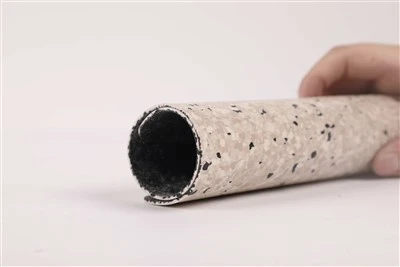
Homogenous vinyl flooring is a single-layer, uniform flooring material with consistent composition, color, and texture running through the entire floor thickness. Manufactured by mixing pure PVC resin, eco-friendly stabilizers, and integrated color pigments, it forms a compact, pore-free integral structure through high-temperature pressing and extrusion. Unlike layered flooring, there is no separate wear layer, printing layer, or base layer. Every millimeter of the floor features identical physical and chemical performance, which is the core reason for its superior long-term durability.
What Is Heterogeneous Vinyl Flooring?
Heterogeneous vinyl flooring is a multi-layer composite product, consisting of a base layer, glass fiber stabilizing layer, printed decorative layer, and surface wear layer. Most low-to-medium grade heterogeneous floors have a thin surface wear layer and surface-only printing patterns. Once the surface layer is worn out, the decorative pattern fades, and the base layer is exposed, leading to an aged, unattractive floor appearance.
Core Differences Between the Two Vinyl Flooring Types
1. Wear Resistance & Aesthetic Retention Homogenous vinyl flooring delivers full-body wear resistance. Even after years of heavy pedestrian traffic, rolling cart friction, and daily abrasion, the floor color and texture remain consistent. Minor scratches and scuffs will not expose different base colors, maintaining a brand-new look for 10–15 years. In contrast, heterogeneous vinyl flooring relies on a thin surface wear layer. Once worn, the floor loses its decorative effect and requires replacement, making it unsuitable for long-term high-traffic use.
2. Hygiene & Stain Resistance The dense, non-porous single-layer structure of homogenous vinyl flooring leaves no gaps for dust, bacteria, or mold accumulation. It can withstand frequent disinfection with medical and industrial disinfectants, making it ideal for healthcare, laboratory, and sterile environments. Multi-layer heterogeneous floors have tiny layered gaps that easily hide dirt and breed bacteria, failing to meet high-standard hygiene requirements.
3. Structural Stability & Durability Homogenous vinyl flooring features integrated structural strength with no delamination risk. It resists thermal expansion and contraction, avoiding warping, curling, or peeling under long-term temperature changes. Heterogeneous floors are prone to layer separation after years of use due to inconsistent material shrinkage rates of different layers, leading to floor bulging and damage.
4. Cost Performance Although the initial purchase cost of homogenous vinyl flooring is slightly higher, its 15+ year service life and zero layered maintenance costs greatly reduce long-term comprehensive investment. Heterogeneous vinyl flooring requires replacement every 3–5 years in high-traffic areas, resulting in higher overall project costs.
Best Application Scenarios for Each Flooring
Choose Homogenous Vinyl Flooring for: Hospitals, clinics, laboratories, schools, airport terminals, supermarkets, industrial workshops, and all high-traffic, high-hygiene, long-term use commercial spaces.
Choose Heterogeneous Vinyl Flooring for: Low-traffic indoor spaces, temporary offices, residential rooms, and short-term decoration projects with low durability requirements.
Final Verdict
For commercial and institutional projects pursuing long-term stability, hygienic safety, and high cost performance, homogenous vinyl flooring is undoubtedly the better choice. Its full-body uniform structure solves the core pain points of traditional layered vinyl flooring such as easy wear, fading, delamination, and poor hygiene, becoming the mainstream flooring solution for modern high-standard commercial buildings.