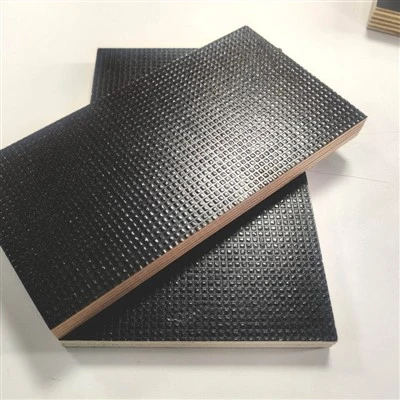
Basic Definition & Core Features
1. Standard Sanded MDF
Standard MDF refers to the original board with double-sided fine sanded treatment, no surface lamination or painting. It retains the original wood fiber flat surface of MDF, focusing on excellent flatness, structural stability and machinability. It is a blank substrate suitable for all secondary finishing processes, with strong universality and flexible processing methods.
2. Melamine Laminated MDF
Melamine MDF is a finished decorative panel based on standard MDF, with high-quality melamine impregnated paper hot-pressed on the surface. Through high-temperature lamination technology, the decorative paper and the MDF substrate are perfectly integrated. It has rich surface textures including wood grain, solid color, matte, high-gloss and texture finishes, with wear-resistant, stain-resistant and anti-fading functions, requiring no secondary finishing.
Key Differences Between Standard MDF and Melamine MDF
1. Surface Performance & Durability
Standard MDF has a smooth but unprotected surface, which is easy to be scratched and stained during processing and use, and needs subsequent painting or veneer protection. Melamine MDF forms a hard protective film on the surface, with excellent scratch resistance, wear resistance, water and oil stain resistance. It is not easy to fade or deform after long-term use, and has stronger environmental adaptability.
2. Processing Difficulty & Production Cost
Standard MDF requires additional processes such as veneer pasting, painting and finishing in the later stage, with complex procedures and high labor and time costs, suitable for personalized customized products. Melamine MDF is a one-time finished board, which can be directly cut and edged for use, saving a lot of post-processing links, greatly improving production efficiency, and more suitable for mass standardized furniture production and engineering projects.
3. Decorative Effect & Style Diversity
Standard MDF relies on later manual finishing, with highly customizable colors and textures, which can meet high-end personalized design needs. Melamine MDF has hundreds of mature surface styles, with clear and realistic texture, uniform batch color difference, stable overall decorative effect, and more consistent product quality for batch orders.
4. Application Scenarios
Standard MDF: Ideal for products requiring personalized painting, veneer customization, CNC precision carving and special-shaped processing, such as high-end custom furniture, art decorative panels and customized craftworks.
Melamine MDF: Perfect for standardized bulk furniture, cabinet bodies, wardrobe panels, indoor wall panels, hotel and office engineering decoration, pursuing high efficiency, low maintenance and unified decorative effect.
How to Choose the Right MDF for Your Project?
Choose standard sanded MDF if you need flexible secondary finishing, personalized design, and high-precision carving processing.
Choose melamine MDF if you pursue fast production, low comprehensive cost, stable batch quality and zero later maintenance.
For humid environment projects such as kitchens and bathrooms, you can choose upgraded moisture-proof melamine MDF to further improve moisture and mildew resistance.
For high-end healthy decoration scenarios such as kindergartens and senior apartments, ENF zero-formaldehyde melamine MDF is the best choice.
Final Thoughts
There is no absolute good or bad between standard MDF and melamine MDF, only suitable or unsuitable for the project. Standard MDF is flexible and personalized, while melamine MDF is efficient and practical. As a professional MDF manufacturer, we provide full-series MDF products including standard sanded MDF, ultra-thin carving MDF, moisture-proof engineering MDF and ENF high-grade melamine MDF, supporting customized size, thickness and surface style services to meet different procurement and project needs of global customers.