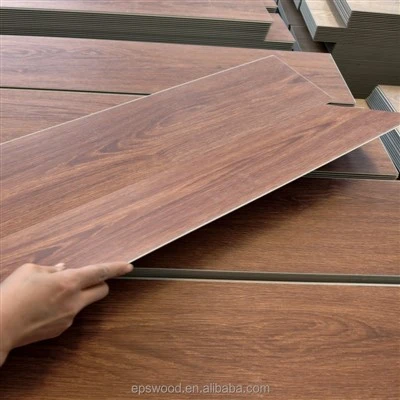
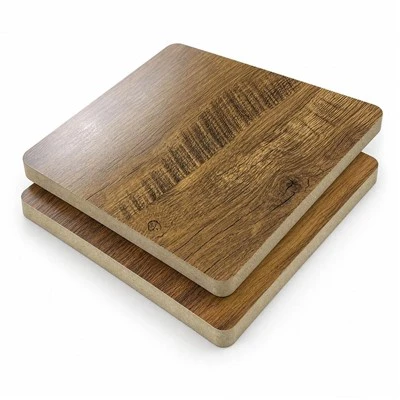
MDF is widely popular due to its smooth surface and easy processing, but the quality of the boards on the market varies greatly. Many buyers only focus on price, ignoring key indicators such as density, internal bonding strength, and formaldehyde release. This article summarizes five major misconceptions to help you accurately select high-quality MDF.
Misconception 1: Only focus on thickness, not density
The same thickness does not mean the same load-bearing capacity. Furniture grade MDF density should be ≥ 680 kg/m ³; If it is lower than 620 kg/m ³, the nail gripping force and static bending strength will significantly decrease. Although lightweight MDF has a low density (550-620 kg/m ³), it is only suitable for non load bearing scenarios such as door panels or ceilings.
Misconception 2: Believing that "E1" is the environmental limit
E1 is the minimum standard for entering the market (≤ 0.124 mg/m ³). For enclosed spaces such as children's rooms and bedrooms, it is recommended to use E0 (≤ 0.05 mg/m ³) or CARB P2 or even formaldehyde free (MDI adhesive) products.
Misconception 3: Neglecting surface sanding accuracy
High quality MDF surface sanding tolerance ≤ 0.1mm. Rough surface can increase paint usage by 20% -30% and easily cause orange peel phenomenon. Flatness can be checked by touching or using a ruler.
Misconception 4: Not testing the water absorption thickness expansion rate
Soak the sample in water for 24 hours, and the expansion rate of high-quality MDF should be ≤ 8% (standard board) or ≤ 12% (moisture-proof board). Poor quality boards may expand by more than 20% and have completely loose edges.
Misconception 5: Blindly pursuing flame retardant grades while neglecting mechanical properties
Some flame-retardant MDF has an internal bonding strength lower than 0.4 N/mm ² due to excessive additives, which makes it prone to breakage during processing. Products with B-s2, d0 grade and internal bonding strength ≥ 0.55 N/mm ² should be selected.
Procurement (downloadable)
- Request suppliers to provide third-party testing reports for the past 6 months
- Check whether the color of the core layer is uniform, whether there are black spots or delamination
- Confirm formaldehyde emission standards and adhesive types
- Request samples for actual cutting and drilling testing