All of that was on the table at some point during the visit - the reports, the spectrophotometer, the loading drawings pulled out in the workshop rather than put together later for an email. None of that order was planned, which is part of why it's worth writing down.
He stopped at our booth in the building materials section for a long while, didn't take a brochure, and opened with a question rather than a greeting: under Middle Eastern sun, how long before your WPC wall panels fade? Omar - distribution and supply to contractors back in Iraq. The photos on his phone were of a job site there: blistering faces, edges separating, color bleached to a chalky white. A batch he'd bought previously had been rejected six months after it went up. Nobody reached for a price list. What our sales colleague put in front of him first was the weathering test report and factory walkthrough footage, then a WeChat contact, then a suggestion that he come see the plant once the fair was over. What I keep coming back to is the next bit, because it's there in the message thread rather than in anyone's retelling.
The next day, three things went out - factory location, a link to the factory photo page, the WPC weathering data. His reply was short: "I'm still in China next week. I can come to the factory. I'll bring a panel we bought on our market."
A week later, or thereabouts; I didn't write the date down. Backpack, and in one hand a cut-down piece of WPC wall panel, visibly faded, edges swollen and split. No small talk. FOB, price differences across thicknesses and surface finishes, MOQ for a single container, payment terms. Our colleague laid the price structure and the spec differences out flat.
"The price I can accept. What I want to see is how you make it - especially the weight and the container loading."
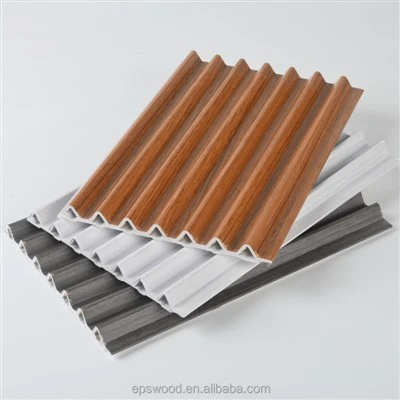
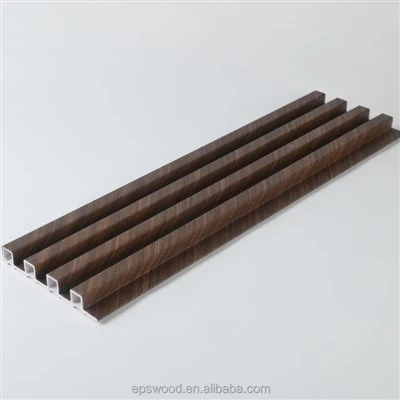
That was, oddly, the shortest part of the afternoon. He asked for the interior line himself. Wall panels, grille panels, trim profiles; the grille panels are where he stopped, and he lifted one. "How much does this one weigh?" A digital scale came out of the workshop, every specification got weighed in front of him, and he read the numbers himself and photographed each one before pulling a few more pieces of the same spec at random to re-weigh - checking the spread, not the average. Then the question that mattered: why that range, and what holds density and wall thickness to it. Raw material formulation, extrusion density control, the wall thickness inspection records. He listened, and then picked up another piece and hefted it anyway.
That business with the scale is the part I'd have remembered without any notes.
Loading came next, and it took longer than the pricing. Mixed grille and wall panels in one container, how much actually fits, how the space gets used - the drawings and photos from real loadings came out, with stacking patterns by spec, corner protectors, stretch wrap, and the way cubic space gets divided. Omar squatted on the floor to sketch it: if the grille goes in loose and the wall panels on pallets, is there room left for trim profiles? The plan was redone right there - what can be nested, what has to lie flat, how heavy and light goods sit together. Volume and weight were worked out on his phone until one container covered the freight, and then: can the loading plan be built around my order mix? Yes. A loading drawing goes out for confirmation on every order.
"This detail matters more than the price."
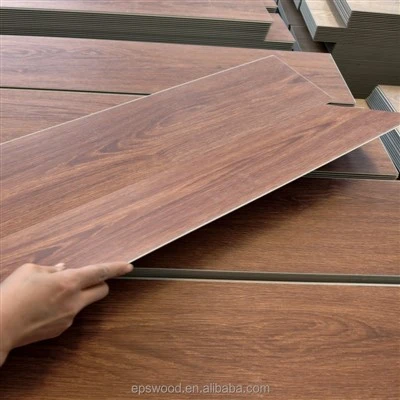
Exterior panels were the last part - weathering, fading, water absorption, impact resistance. In the sample area his problem panel went down beside our factory sample; a key across the surface, a look at the edges for delamination, both held against retained color chips of the same shade. The UV aging report and the color difference readings before and after accelerated aging were on the table. Batch-to-batch consistency was the next question, which is why he ended up in front of the spectrophotometer, the retained-sample cabinet and the comparison records kept for every batch; he filmed that bit and sent it to his partner with a line about taking exterior samples home to test first.
Dinner was simple. Later that evening a bag went to his hotel - color chip cards, small exterior panel samples, small grille samples, the chips sorted by the shades common in his market and every piece labelled with spec, batch and date. Two colors got circled on the spot. "Make samples of these two first." He'd test them, he said, and come back the following month for the trial production run. He did say that. Whether the month holds is another matter.
The sampling went onto the schedule after he left; test data, loading drawings and the weathering comparison records followed by email. He acknowledged them, said he'd arrange sun-exposure and water-immersion comparisons at a local site, and would be in touch with results. There is no order and no contract. What he carried away is under Iraqi sun and on a job site being tested, and what we can do from here is wait, keep track, and get those two shades made properly.
We came back from the fair with a stack of business cards. Very few of them turned into a factory visit. Omar left with a bag of labelled samples and a few photos of scale readings on his phone - taken by him, in the workshop, not sent to him afterwards. We'll hear something when the tests are done, or we won't. Either way the two shades are in the sampling queue.