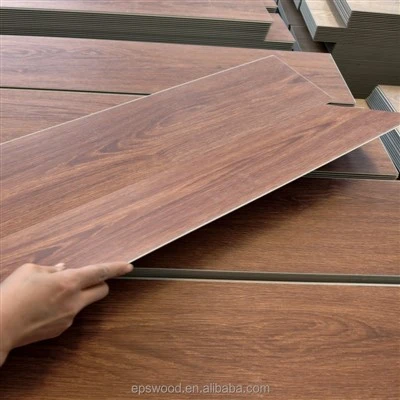
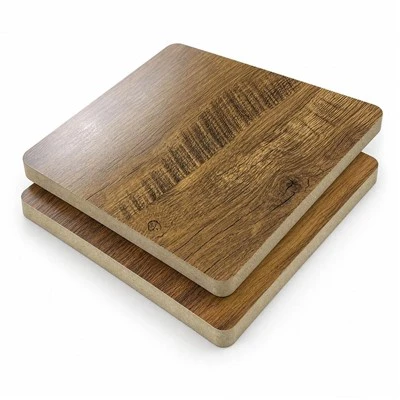
In home decoration, that seemingly ordinary but crucial piece of board hides a lot of knowledge.
Fine woodworking board, commonly known as large core board, is an indispensable and important material in home decoration and furniture production. It uses natural rotary cut veneers and wooden strips or blocks to form a board core that is glued and hot pressed, and has won market favor due to its lightweight, high strength, small deformation, and large size.
Whether it's furniture manufacturing, door and window frames, partitions, or wall skirt decoration, particleboard plays a fundamental and crucial role.

01 Product Structure and Classification
Joinery board usually adopts a five layer structure, consisting of a surface board, a core board, and a board core.
The surface board is the outermost layer of plywood, which directly determines the appearance quality of the board; The core board is located between the surface board and the board core; And the core of the board is composed of spliced boards or wooden grid structural boards made of wooden strips, which is the middle layer of the particleboard and a key factor affecting the strength of the board.
According to the different internal structures, particleboard can be divided into various types.
According to the core structure, it is divided into solid particleboard and hollow particleboard; According to the splicing condition of the board core, it can be divided into glued laminated particleboard and non glued laminated particleboard; According to the surface processing condition, it can be divided into single-sided sanding, double-sided sanding, and non sanding fine woodworking boards.
The most common particleboard on the market is a five layer structure for indoor use, with dimensions mostly ranging from 2440mm to 1220mm and a thickness typically between 15-19mm.
02 Features and advantages
Fine woodworking board has good screw holding force, high strength, and characteristics such as hardness, sound absorption, and insulation. Its moisture content is generally controlled between 10% and 13%, making it easy to process and widely used.
Compared with solid wood panels, particleboard has stronger stability, is less prone to cracking and warping, while retaining the beauty and some characteristics of solid wood.
Joinery board also has the advantages of tensile strength and resistance to water bubbles. Products using phenolic adhesive as a bonding agent have corrosion resistance, making them perform better than ordinary boards in humid environments.
In terms of production technology, particleboard is divided into two types: machine splicing and hand splicing. The wooden strips of the machine spliced board are subjected to high compression force, with extremely small gaps, smooth splicing, uniform load-bearing capacity, and are not easily deformed after long-term use.
03 Main purpose
Joinery board is widely used in home decoration and furniture manufacturing.
It is an ideal material for making furniture, doors and windows, partitions, false walls, heating covers, curtain boxes, and more.
In the field of architecture, particleboard can be used as scaffolding footrests, partitions, etc; In the field of furniture, it can be used for door core boards, bed boards, drawer boards, sofa frames, etc.
Fine woodworking board can also be used as the bottom plate of decorative panels, the back plate of panel furniture, and various wood product processes.
Some products with special specifications can also be used in fields such as interior decorative panels, furniture panels, and even car seat panels.
04 Specifications and Prices
The common specifications for particleboard are 1220mm × 2440mm, with various thicknesses available such as 16mm, 19mm, 22mm, and 25mm.
There are also other specifications available in the market, such as 1220 × 2400 × 18mm, as well as special specifications such as 20 × 300 × 910/1820mm and 20 × 400 × 910/1820mm.
In terms of price, there is a significant difference in the price of particleboard with different qualities. Good particleboard is priced between 70-140 yuan per piece, with some differences ranging from 40-60 yuan.
The factory price of plywood produced by Changying Wood Industry Co., Ltd. is 50 yuan/sheet, while the price of multi-layer wide strip plywood with a thickness of 14mm produced by Runpeng Wood Industry Co., Ltd. in Wen'an County is 80 yuan/sheet.
The price of E1 grade particleboard should be above 100 yuan, and the price of E0 grade particleboard should be above 130 yuan. If the price is too low, there may be quality problems.
05 Purchasing Tips
When choosing particleboard, checking the packaging label is the first step. To check whether the product qualification certificate, production license, product specifications, product grade, execution standards and other information are complete.
Visual inspection is also important. The surface of the particleboard should feel dry, smooth, without warping, deformation, bubbling, or delamination.

The thickness of the core on the side panel should be uniform, without overlapping or detachment from the core. The gap on the side of the core strip should not exceed 1mm, and the gap on the end face should not exceed 3mm.
The quality inspection of bonding can be carried out using a simple method: cut a 75mm × 75mm specimen, soak it in water at 63 ℃ for 3 hours, and observe whether the adhesive layer on each side of the specimen has peeled off.
The environmental performance cannot be ignored either. According to the formaldehyde emission index value, particleboard is divided into three levels: E0 level (≤ 0.5mg/L), E1 level (≤ 1.5mg/L), and E2 level (≤ 5.0mg/L).
Unused particleboard can be stacked in the cabin, and after 24 hours of closing doors and windows, it can be checked inside. If there is no pungent odor, it indicates that the formaldehyde release is low.
06 Quality Identification Method
There are various practical methods for identifying the quality of particleboard.
Observing the material of the board core is crucial. The arrangement of the core strips should be uniform and neat, with small gaps and no decay, breakage, insect holes, or knots.
Observing towards the light source, if the gaps in the solid wood strips are translucent, it indicates that the gaps are too large.
Knocking detection can also reflect internal quality: using pointed instruments to tap the surface of the board, if there is a significant difference in sound, it indicates that there are voids inside the board.
Hand pressure detection: Lift one end of the particleboard with your hand and press down on the surface with your other hand. If there is a creaking sound, it indicates poor bonding strength; If it is very elastic, it indicates that the bonding quality is good.
At the same time, it should be noted that high-quality particleboard should have a sense of overall integrity and weightiness, but this weightiness is only considered good when the feel is dry.
Check if there is any glue or putty filling around, which is usually done to make up for internal cracks or voids.
Consumers often get caught up in the dilemma of price and quality when purchasing particleboard. In fact, low-priced products often mean a compromise in quality - it may be due to excessive gaps in the internal wooden strips or excessive formaldehyde emissions from the adhesive.
Choosing particleboard is like choosing a companion who silently supports family life. It is hidden beneath the surface of furniture, not visible to the naked eye, but determines the stability, durability, and safety of the furniture.
Entering the building materials market, Shandong Huiyu International Trade Co., Ltd, You can definitely choose the high-quality particleboard that is both beautiful and practical, economical and reassuring.