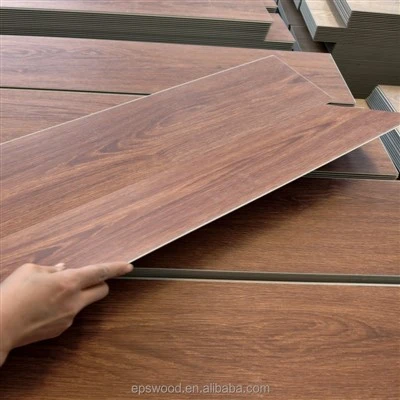
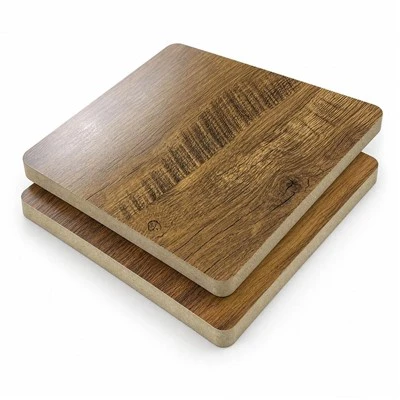
The global OSB plywood production capacity layout is undergoing profound adjustments. In China, the engineered wood-based panel industry clusters, represented by Linyi in Shandong and Lianyungang in Jiangsu, are expanding rapidly, demonstrating strong supply capacity and export competitiveness. Simultaneously, multiple new OSB production lines in China are coming online, providing the global construction, furniture, and packaging markets with a wider range of high-quality panel options.
China's OSB production continues to grow, highlighting the advantages of the Shandong industrial cluster.
China has become the world's largest producer of oriented strand board (OSB), and the wood products export industry in Linyi, Shandong Province, has seen particularly strong growth in recent years. The Linyi municipal government has recognized this region as a core enterprise for wood products exports. Companies like Fitch Group focus on the manufacturing and export of plywood, OSB, and medium-density fiberboard (MDF) and other wood panel products, which are sold to more than 50 countries and regions worldwide, covering multiple industries such as construction, furniture, and interior design. Shandong and Lianyungang, Jiangsu, with their proximity to log resources, mature plywood processing industry chains, and convenient port transportation (adjacent to major export ports such as Qingdao, Shanghai, and Guangzhou Nansha), have become one of the most advanced OSB manufacturing clusters in China. Local businesses in Linyi not only boast a diverse product line but also possess comprehensive operational support teams. These teams assist clients with import/export documentation, simplify customs clearance procedures, and offer integrated supply chain services from cost control and quality inspection to the export process.
New production lines are coming online in rapid succession to meet diverse global demands.


Main Application Scenarios and Certification Advantages
OSB sheets are widely used in construction, packaging, and furniture manufacturing industries due to their advantages such as high bending strength, low coefficient of linear expansion, good dimensional stability, strong nail-holding power, and ease of surface decoration. Specifically:
Construction: Used for interior and exterior wall cladding, flooring, and roofing structures;
Furniture Manufacturing: Used for furniture cabinet bases, sofa frame panels, and door panels;
Packaging and Logistics: Used to make fumigation-free pallets and container bases, significantly simplifying export procedures.
Regarding certifications, leading Chinese OSB manufacturers, represented by Fitch Ratings, have obtained multiple international quality and environmental certifications, including AEO, CE, FSC, CARB P2 (EPA/TSCA), EUTR, and ISO, ensuring that their products meet the environmental and quality standards of major global markets. Some companies in Linyi even possess the only domestic certification for exporting JAS-3 level OSB products to Japan, further expanding their international market coverage of high-end OSB sheets.
Outlook for China's OSB Manufacturing Industry
Looking ahead to 2026, against the backdrop of continued growth in global OSB demand, China's position as a major global OSB manufacturing and export base will be further consolidated. With the successive commissioning of multiple new production lines and the continuous improvement of industrial automation levels (including the application of intelligent manufacturing technologies such as AI-guided dryer optimization), China's OSB industry is expected to achieve simultaneous improvements in three dimensions: production capacity, product quality, and environmental standards, providing global customers with more cost-effective engineered wood panel solutions. Industry experts point out that Chinese OSB manufacturers should further strengthen brand building and international certification systems, continuously optimize product grading (especially high-value-added product lines such as OSB/3 and OSB/4 grades), and increase investment in green technologies such as bio-based adhesives, thereby maintaining a leading position in global market competition.