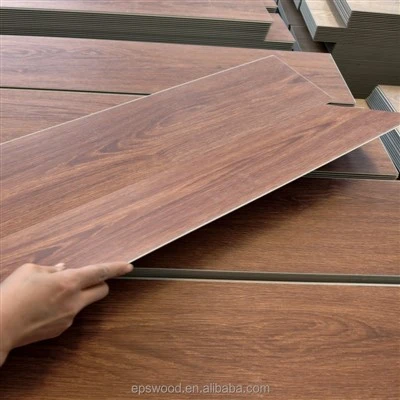
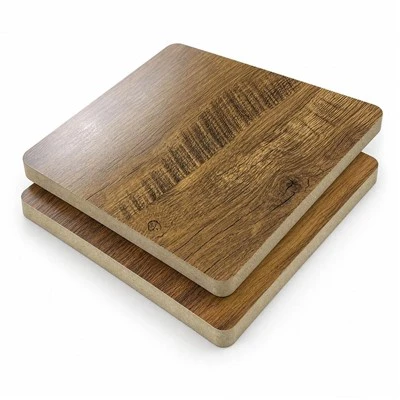
Choosing the right engineered wood panel is the most critical step for custom furniture manufacturing, interior decoration, and commercial partition projects. Among the most popular options on the global market-blockboard, plywood, and MDF (Medium-Density Fiberboard)-many builders, furniture manufacturers, and homeowners struggle to pick the most cost-effective, durable, and stable material. Each panel type features unique structural strengths, weaknesses, and applicable scenarios. This in-depth comparison breaks down the core differences between blockboard, plywood, and MDF, helping you select the ideal wood board for residential and commercial interior projects while explaining why blockboard has become a top trending choice for modern interior construction in 2026.
What Is Blockboard? Core Structure & Working Principle
Blockboard is a premium engineered wood panel constructed with a solid finger-jointed softwood core (paulownia, pine, or falcata) sandwiched between two layers of high-toughness hardwood veneer, bonded under high-temperature and high-pressure processing. Unlike fully layered plywood or powder-pressed MDF, blockboard adopts a solid wood strip core structure with a higher wood-to-glue ratio, delivering performance closer to natural solid wood while avoiding the high cost and deformation risks of pure solid wood. Its seamless finger-jointed core eliminates internal hollow gaps, ensuring uniform structural stability across the entire board surface.
Blockboard vs Plywood: Stability & Practicality Comparison
Plywood is made of cross-laminated thin wood veneers, featuring excellent bending strength and impact resistance, which makes it suitable for outdoor structural projects and heavy-load bearing surfaces. However, traditional plywood has an obvious flaw: large-size plywood panels are prone to longitudinal bending and sagging after long-term use, especially for full-height partition walls and long-span tabletops over 1.5 meters. Additionally, high-density plywood weighs significantly more, increasing installation difficulty and hardware load pressure.
In contrast, blockboard solves the large-span deformation pain point perfectly. Its integrated solid wood core provides outstanding flatness retention, with zero sagging for large partition panels and long furniture boards. Meanwhile, lightweight core materials reduce the overall board weight by 20%-25% compared with standard plywood, lowering construction labor costs and extending the service life of door hinges, slide rails, and other hardware accessories. The only limitation of blockboard is that its local point-load resistance is slightly lower than thick plywood, making it less suitable for extreme heavy-duty structural engineering, yet fully competent for all indoor furniture and partition scenarios.
Blockboard vs MDF: Durability, Moisture Resistance & Environmental Protection
MDF (medium-density fiberboard) is processed from wood powder and adhesive, with an ultra-smooth surface that is ideal for complex modeling and high-gloss painting. Nevertheless, MDF has three unavoidable drawbacks for long-term interior use: poor moisture resistance, low screw holding capacity, and high formaldehyde emission risks. MDF absorbs water easily and swells or deforms in humid environments, making it unsuitable for kitchens, bathrooms, and balconies. Moreover, once screws are loosened, MDF cannot re-fix hardware firmly, leading to short furniture service life.
Blockboard completely outperforms MDF in core practical performance. The solid wood core delivers 30% higher screw holding power than MDF, ensuring stable hardware fixation for decades. With professional moisture-proof and anti-mildew treatment, premium blockboard adapts to humid indoor environments without swelling or cracking. In terms of environmental protection, blockboard uses far less adhesive than MDF, supporting E0 ultra-low formaldehyde emission standards, fully compliant with EU indoor environmental requirements. Although MDF has better moldability, blockboard is the more reliable choice for practical, durable, and healthy interior furniture.
Best Application Scenarios for Blockboard, Plywood & MDF
Blockboard: Interior wooden doors, office partition walls, custom wardrobes, kitchen and bathroom cabinets, ceiling decorative panels, high-end whole-house customization, large-span indoor decorative boards
Plywood: Outdoor building structures, floor baseboards, heavy-load industrial supports, shear wall engineering
MDF: Indoor decorative lines, complex-shaped door panels, short-span decorative modeling boards, dry-area temporary decoration
Final Verdict: Why Blockboard Is the Top Choice for 2026 Interior Projects
For 90% of residential and commercial interior decoration and furniture customization projects, blockboard achieves the perfect balance of stability, durability, environmental protection, and cost performance. It avoids the sagging defect of large-size plywood and the moisture-proof and durability shortcomings of MDF, while maintaining lightweight and easy-processing advantages. With E0 eco-friendly options, customizable sizes, and excellent decorative adaptability, modern high-quality blockboard has become the mainstream substitute for traditional plywood and MDF in global interior design.