As a supplier of UV Birch Plywood, I often encounter questions from customers about the environmental impact and recyclability of our products. In this blog post, I will delve into the topic of whether UV Birch Plywood can be recycled, exploring the science behind it, the recycling process, and the benefits of recycling this type of plywood.
What is UV Birch Plywood?
UV Birch Plywood is a type of engineered wood product made from thin layers of birch veneer that are glued together with a special UV - curable adhesive. This adhesive is cured using ultraviolet light, which gives the plywood several advantages, such as high strength, excellent durability, and a smooth finish. It is commonly used in a variety of applications, including furniture manufacturing, cabinetry, and interior design.
The Composition of UV Birch Plywood and Its Impact on Recyclability
To understand whether UV Birch Plywood can be recycled, we first need to look at its composition. The main components of UV Birch Plywood are the birch veneers and the UV - curable adhesive.

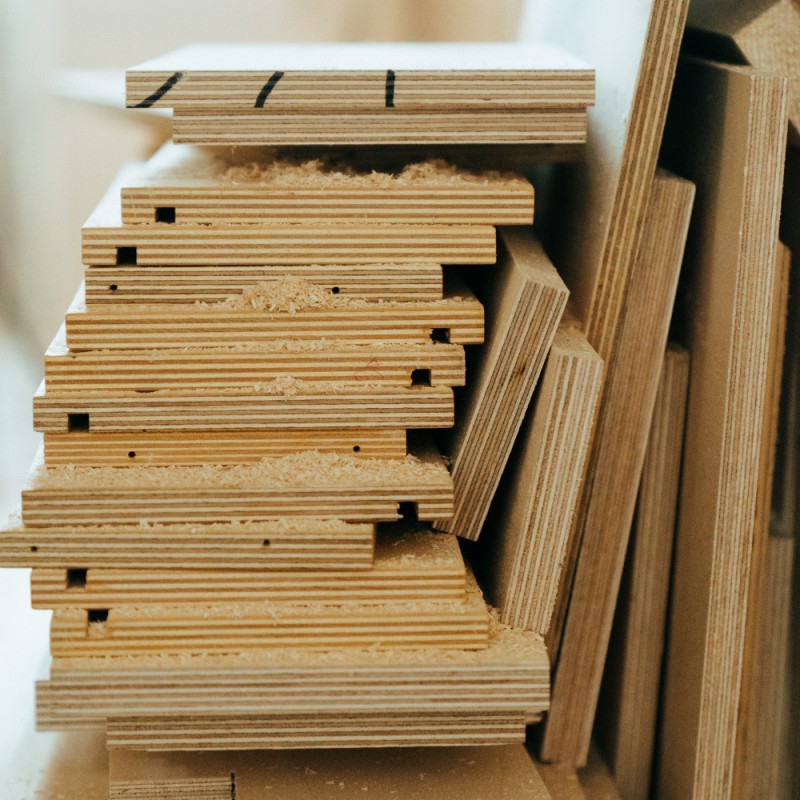
Birch wood itself is a natural and renewable resource. Wood is biodegradable and can be recycled in many cases. When it comes to recycling wood, it can be chipped and used as a raw material for the production of other wood - based products, such as particleboard or fiberboard. However, the presence of the UV - curable adhesive complicates the recycling process.
UV - curable adhesives are designed to be very strong and resistant to environmental factors. They form a cross - linked polymer structure during the curing process, which makes them difficult to break down. This means that separating the birch veneers from the adhesive can be a challenging task.
Recycling Processes for UV Birch Plywood
There are several potential methods for recycling UV Birch Plywood, although each has its own challenges and limitations.
Mechanical Recycling
One approach is mechanical recycling, which involves grinding the plywood into small pieces. This can be done using industrial shredders or chippers. The resulting wood chips can then be used in the production of other wood - based products. However, the presence of the adhesive in the chips can affect the quality of the new products. For example, the adhesive may not bond well with other materials or may cause issues during the manufacturing process.
Chemical Recycling
Chemical recycling methods aim to break down the adhesive and separate it from the wood. This can involve using solvents or other chemicals to dissolve the adhesive. However, this process is often expensive and may produce hazardous waste. Additionally, finding the right chemicals that can effectively break down the UV - curable adhesive without damaging the wood is a significant challenge.
Energy Recovery
If recycling the UV Birch Plywood into new wood products is not feasible, energy recovery can be an alternative. The plywood can be burned in waste - to - energy plants to generate heat or electricity. While this is a way to make use of the material, it is not a true recycling process as it does not result in the creation of new wood - based products.
Benefits of Recycling UV Birch Plywood
Despite the challenges, there are several benefits to recycling UV Birch Plywood.
Environmental Benefits
Recycling reduces the demand for virgin wood, which helps to conserve forests. Forests play a crucial role in absorbing carbon dioxide, a greenhouse gas that contributes to climate change. By recycling wood, we can also reduce the amount of waste sent to landfills, which helps to minimize environmental pollution.
Economic Benefits
Recycling can also have economic benefits. Using recycled wood as a raw material can be more cost - effective than using virgin wood in some cases. Additionally, the recycling industry creates jobs in areas such as collection, processing, and manufacturing.
Our Company's Commitment to Sustainability
As a supplier of UV Birch Plywood, we are committed to sustainability. We understand the importance of reducing our environmental impact and are constantly exploring ways to improve the recyclability of our products.
We offer a range of UV Birch Plywood products, including Full Birch Plywood, CNC Birch Plywood For Laser Cutting, and High Strength Birch Plywood For Furniture. We are working with research institutions and industry partners to develop more environmentally friendly adhesives and recycling technologies.
Conclusion and Call to Action
In conclusion, while recycling UV Birch Plywood presents some challenges due to the presence of the UV - curable adhesive, it is not impossible. There are various recycling methods available, each with its own pros and cons. Recycling UV Birch Plywood offers significant environmental and economic benefits, and we are committed to playing our part in promoting a more sustainable future.
If you are interested in purchasing our UV Birch Plywood products or have any questions about our sustainability initiatives, please feel free to contact us. We look forward to discussing your needs and working together to find the best solutions for your projects.
References
- Smith, J. (2020). Recycling of Engineered Wood Products. Journal of Wood Science, 66(3), 211 - 220.
- Johnson, A. (2019). The Environmental Impact of Wood Adhesives. Environmental Science & Technology, 53(12), 6789 - 6797.
- Brown, C. (2021). Sustainable Wood Recycling: Challenges and Opportunities. International Journal of Sustainable Development, 15(2), 123 - 135.